"Bottom line – we do not currently have the money to undertake this project as originally planned." That line ran in the May 2026 issue of The Signal, the newsletter of the Cowell Homeowners Association. The association runs the shared pools, courts and greenbelt of Walnut Country, also known as The Crossings, near Ygnacio Valley Road and Cowell Road in Concord.
That project is the Main Pool, and it explains most of what the monthly dues here have been doing. Over the last two years the board has twice raised dues by a modest amount instead of sending owners one large bill. If you're comparing this neighborhood with others in Concord, the dues amount matters less than the plan behind it. That plan is slow and steady, and you join it partway through.
A neighborhood built around shared space
Walnut Country was planned around its common areas from the start. A 2012 Patch neighborhood history traces the land from the Cowell company to Newhall in 1959 and to Larwin in 1969. Homes went up in four phases beginning in 1972, and the tract eventually reached about 1,062 single-family houses. The association's own newsletter names the Donald L. Bren Company, now succeeded by the Irvine Company, as one of the original developers in the 1970s. That history still turns up in board business. In 2026 the Irvine Company found that a common-area parcel making up a large part of the dog park along Ayers Road had never been transferred to the association, and the board authorized signing a quitclaim to put it in the HOA's name.
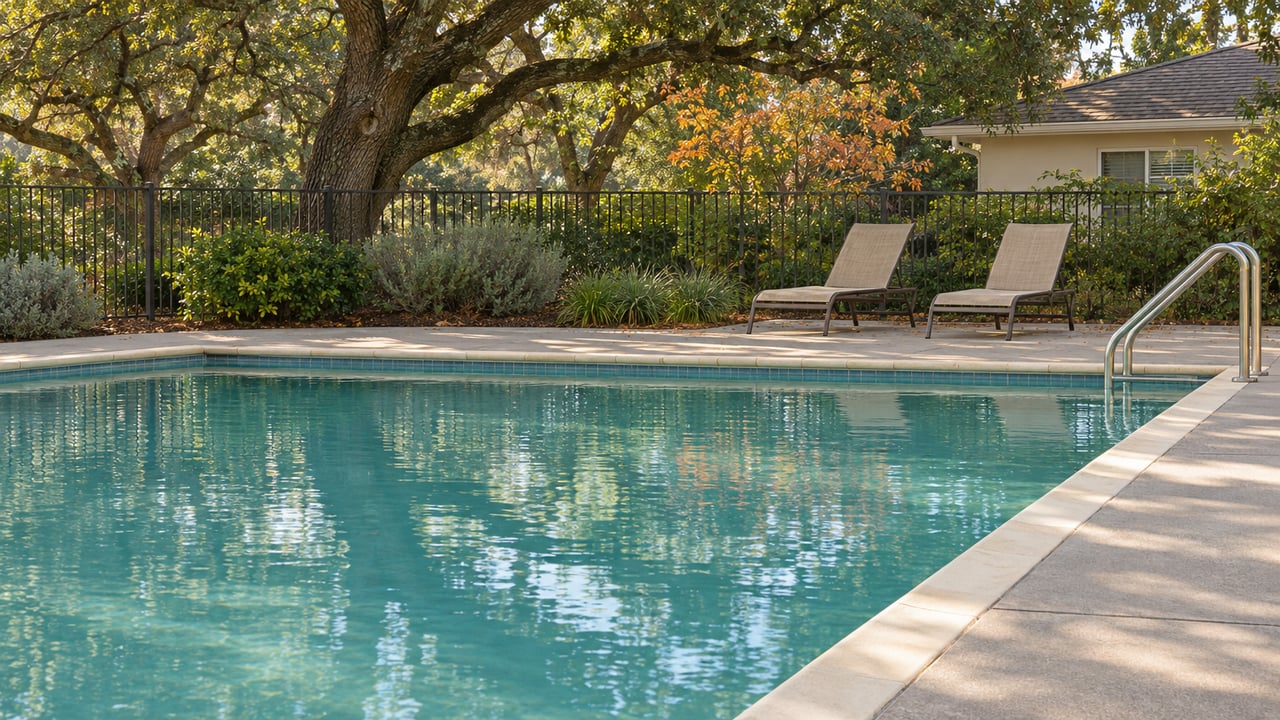
According to the association's website, the shared spaces today are three pools, seven tennis courts, four pickleball courts, a clubhouse, two playgrounds, basketball courts and a dog park. A paved greenbelt walkway runs about a mile between the community's east and west entrances without crossing a street. One of the original tennis courts became pickleball in 2021.
Three dues figures in two years
The monthly assessment was $116 before January 1, 2025, when it rose to $137, according to the association's 2025 assessment notice. It rose again to $154 in January 2026, which works out to $1,848 a year.
| Period | Monthly assessment |
|---|---|
| Through 2024 | $116 |
| 2025 | $137 |
| 2026 | $154 |
The December 2025 Signal broke down the most recent $17 increase. Ten dollars went straight to reserves, "in large part to account for the upcoming Main Pool project without needing to implement an expensive special assessment." Six dollars covered higher insurance, PG&E, water and mailing costs. The last dollar came from inflation adjustments and vendor contract increases. The board had made the same kind of choice the year before. The 2025 notice called reserves the largest single piece of the budget, and most of that year's reserve increase was tied to the Main Pool.
The association's total budget is more than $2 million, spread over more than 40 line items. The board scheduled its review of the 2027 budget, which sets next year's monthly amount, for a September 3, 2026 Zoom meeting that was open to every owner. If you're buying in, ask the business office for the current figure.
The pool the reserves are building toward
The Main Pool plan dates to July 2024. The association's Overall Repair Plan estimated the full reconstruction at $1,236,728, including required construction, ADA upgrades, engineering and contingency. As planning went on, the scope grew. To add a sloped entry ramp, the wading pool would need to be rebuilt from scratch. Optional items were added too: a shade structure with solar panels on the Lawson Court side, an extended deck and a waterproofed storage room beneath the deck.
Bids arrived in the first week of April 2026. With every optional item included, the job came to about $3 million, and all three bids were within 10% of one another. A stripped-down version that simply paved over the wading pool still came to about $2.1 million, which the association said was more than $800,000 over its original budget. At its April 23 meeting, the board said it was generally not in favor of a special assessment or a dues increase to close that gap. It directed the general manager to focus on replacing the equipment in the pump room instead.
That is the current plan. In October 2026 the board approved Phase 1, which renovates the equipment room and replaces components such as pumps and filters. The project page expects that work to finish in early 2027, in time for the pool to open in spring as usual, with no deck construction expected in 2026 beyond minor winter repairs.
What the arithmetic tells a buyer
The $10 a month that went to reserves in 2026 comes to $120 per home per year. Across roughly 1,062 homes, that is about $127,000 a year. At that pace, the more-than-$800,000 gap would take the reserve increase alone about six to seven years to cover. That's rough arithmetic. It leaves out other reserve funds, interest, future increases and further changes in construction costs.
It does show how the board's approach works. A special assessment would put the whole cost on the people who own homes in the year it's levied. Small yearly increases spread the cost over many years and over everyone who owns a home here during that time, including buyers who haven't moved in yet. Someone buying in 2027 starts paying toward a pool the board began planning in 2024. Someone who sells in 2026 has paid part of the cost of a pool rebuild they won't be around for.
Concord has neighborhoods with lower HOA costs and neighborhoods with none. Walnut Country's figure includes a running payment toward a large shared project, and the board has said in writing how it intends to pay for it. The deck, the ADA entry and the wading pool are still on the project list with no date attached. The board also approved a proposal from Reserve Analysis Consulting, LLC to draft the association's 2027 reserve study. Once that study is done, it will be the clearest record of where the reserves stand.
The figures here are general information for comparing neighborhoods, not legal, tax or financial advice. Please confirm the current dues, reserves and any pending assessments with the association and the right professional before you rely on them. Our earlier look at how HOA records affected Walnut Creek condo financing covers why an association's records matter during a sale.
Where the rest of the money shows up
Most of the budget goes to keeping up what's already here. In 2025 the association replaced a well serving the central greenbelt and pruned nearly 400 trees. It also replaced the playground shade sails, repainted and refurnished the clubhouse lounge and switched to organic-certified weed-control products. In April 2026 it added a flow meter to track the district water used for irrigation. In July it approved a protective fence around a heritage oak on the greenbelt to keep foot and bicycle traffic off its roots. Monitored security cameras were approved for the East, West and Main pools to replace the earlier patrol service.
Some of the spending deals with competing uses of the same spaces. After complaints about pickleball noise, the board approved sound-mitigation panels in December 2025. It reported in April 2026 that the wall helped less than hoped. In July 2026 it appointed a temporary pickleball committee to look at further options.
The pools carry the most demand. The Stingrays swim team asked in spring 2026 to add 45 minutes to its weekly practice hours after what the board called a significant increase in sign-ups for the Little Ray and 6+ age groups. The board said no, out of concern for other residents who use the pool. Pool access is by key fob. The Main Pool's posted hours are 5 a.m. to 9 p.m., and the two side pools are open 7 a.m. to 8 p.m. The heaters were turned off for the season on November 2. Water aerobics runs at the East Pool on Mondays, Wednesdays, Fridays and Saturday mornings.
The greenbelt also gets used beyond the neighborhood. The association's Winter 2025 newsletter reported that part of the walkway hosted Concord's Turkey Trot for the fifth year in a row. It's one of the few HOA-maintained spaces in town that people from other parts of Concord have reason to visit, and a good share of the dues covers its upkeep.
If you're weighing Walnut Country against other Concord neighborhoods, or you own here and want to know how the dues history fits into your home's value, Kelly McDougall is glad to talk it through with you. Request a free local market consultation and home valuation, and we'll start with The Crossings budget and what it means for your plans.